What the 2021 Freeze Did to Acadiana Plumbing | Parish Plumbing
February 2021 was a week that changed how south Louisiana thinks about winter. Temperatures that stayed well below freezing for days, in a region built for heat and humidity, and a wave of burst pipes across Acadiana that kept plumbers on call around the clock.
The useful thing about that week is not the war stories. It is that it showed exactly where our houses are weak, and the pattern repeats every time a hard freeze comes back, which it has.
Why our houses fail in the cold
Louisiana construction is engineered for cooling. Attics vent hard, which is right for July and brutal for a pipe in January. Three weak points account for most freeze damage here.
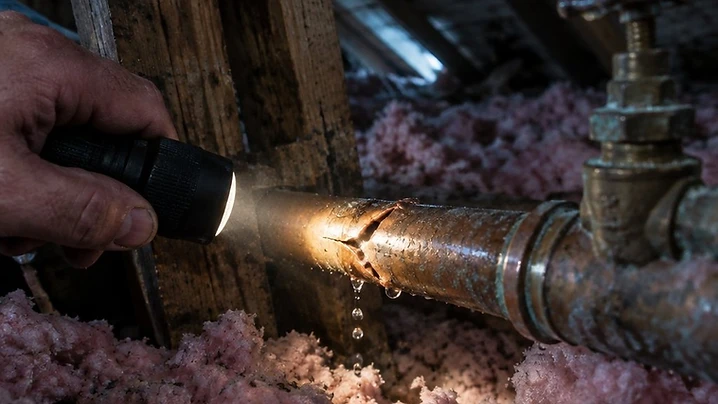
- Pipes in the attic. Builders often run supply lines through the attic because it is simple and cheap. The attic is the coldest place in the house and the least insulated part of it.
- Pipes in exterior walls. In a house built for a mild winter, a line to a kitchen sink on an outside wall can sit inches from siding with little between it and the outdoors.
- Anything outside. Hose bibs, irrigation backflow preventers, pool equipment, well pumps and tanks, and the exposed plumbing on a pier-and-beam house.
There is a second effect people forget. When a line freezes, the ice does not usually break the pipe. The pressure between the ice plug and a closed fixture breaks it. That is why the burst often happens after the thaw starts, and why it is often in a spot with no ice in it at all.
What the water system did
Prolonged cold drove water demand up as people dripped faucets, and broken mains and service lines dropped pressure across parts of the system. Low pressure means a precautionary boil water advisory, which is exactly what happened across a lot of Louisiana that week. When pressure drops, the utility cannot guarantee nothing came in through a break.
So the damage was not only inside houses. It was also the days a lot of people spent boiling water.
The fixes that actually hold
- Insulate attic runs and exposed pipe. Insulate attic runs and any exposed pipe in a garage or crawl space. Foam sleeves are cheap and effective. Where a run is in a hard-to-reach attic corner, heat cable on a thermostat is a real answer, not an overreaction.
- Air seal and insulate the attic itself. A better-sealed attic is a warmer attic, which protects the pipes and trims your summer bill at the same time.
- Insulate exterior wall cavities. Insulate exterior wall cavities where lines run, and on a new build or a remodel, ask for lines to be kept off the exterior wall. On existing homes, opening cabinet doors during a freeze lets warm room air reach the pipes under the sink.
- Know your main shutoff and test it. In a burst, the difference between a wet floor and a flooded house is how fast the water stops. Everyone in the house should know where it is.
- Before a freeze: disconnect hoses, shut off and drain irrigation, cover hose bibs, drip the faucets farthest from the meter, and leave cabinet doors open under sinks on exterior walls.
- If a pipe bursts: shut the main off first, then kill power to any circuit in a wet area before you walk through it, then call. Photograph everything before you start moving water.
What changed since
Some of what changed was good. Insulation standards tightened, and attics have gotten better. Homeowners here are far more aware of their shutoff than they were before 2021.
Some of it did not change. Attic plumbing is still common, exterior wall plumbing is still common, and hard freezes keep coming back. The forecast does not need to match February 2021 to burst a line. A single hard night is enough when a pipe sits in an uninsulated attic corner.
What to do this winter before the first hard freeze
Walk the house and look for exposed copper or PEX. Check the attic, the garage, under the house if you have a crawl space, and the outside walls. Insulate what you find. Test the shutoff. Write down the plumber's number where you can find it in the dark.
If you would rather someone else look, that is what we do. Call (337) 258-4861.
Frequently Asked Questions
At what temperature should I drip my faucets in Lafayette?
When a hard freeze is forecast, meaning hours below freezing, drip the faucets farthest from where the water enters the house. A slow trickle is enough. Moving water freezes much more slowly than still water, and the open faucet gives expanding ice somewhere to go.
Why did my pipe burst after the freeze ended?
Because ice expands and traps pressure between the plug and a closed valve or fixture. The break lets go when pressure wins, which is often during the thaw. That is also why the leak can appear far from where the ice actually was.
Should I shut off the water when I leave town in winter?
If a hard freeze is in the forecast and nobody is home, yes. Shutting off at the main and opening the lowest faucet to drain the lines removes the failure mode entirely.